Our Story
The Beginning
The story of the Sudreau Global Justice Institute spans more than 20 years. It all
began in 2000, when American lawyers Bob Goff and Danny DeWalt formed the law firm Goff & DeWalt, LLP. A few years later, that firm established
a non-profit organization called Restore International, which would conduct anti-human
trafficking efforts in areas of the world where children were suffering, beginning
in India. In 2006, they became friends with an exiled Ugandan living in San Diego,
who shed light on the atrocities happening in his home country. This connection resulted
in an invitation to visit Uganda from the Chief Justice of Uganda, Benjamin Odoki.
The Conditions on the Ground
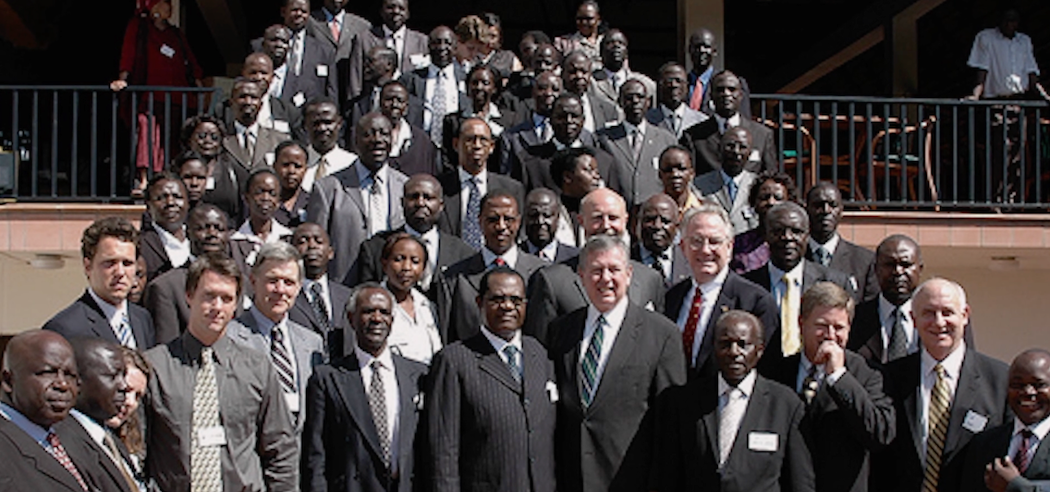
In 2006, Ugandan children were still walking into Gulu at night for protection from the Lord’s Resistance Army (LRA), an armed military seeking to overthrow the government of Uganda. Upon visiting Northern Uganda by military escort, Bob and Danny made two observations. First, many children were not in school because they had lost their parents in the insurgency and could not afford school fees. And second, the courthouse had been closed because it was unsafe for judges to hold court during the Civil War, so justice had come to a halt.
Goff and DeWalt proposed three things to the Chief Justice to support his vision for restored justice in the North: 1) Re-open the courthouse in Gulu, 2) Establish an annual judiciary conference, and 3) Establish a school in Gulu for children who could not afford school fees. These proposals were enthusiastically received by Chief Justice Odoki, and Goff and DeWalt proceeded to collaborate with the judiciary of Uganda to reopen the courthouse and the annual judiciary conference in 2007 and 2008.
In 2007, Goff and DeWalt, through their nonprofit Love Does, purchased land and opened
Restore Leadership Academy, which today houses and provides Christian education to
over 1500 students from nursery age through high school and A Levels. Over the years,
Restore Leadership Academy has been expanded and is presently building Restore University
on adjacent property.
A Convergence of Streams
In 2009, having learned about their work in Uganda, Ken Starr, the dean of Caruso School of Law, invited Goff and DeWalt to teach an experimental course called “How to Change the World with Your Law Degree.” The course was eventually converted to a permanent course called “Non-Profit Corporation Law,” and then eventually “Faith, Leadership, and the Practice of Law,” which ran for 12 years.
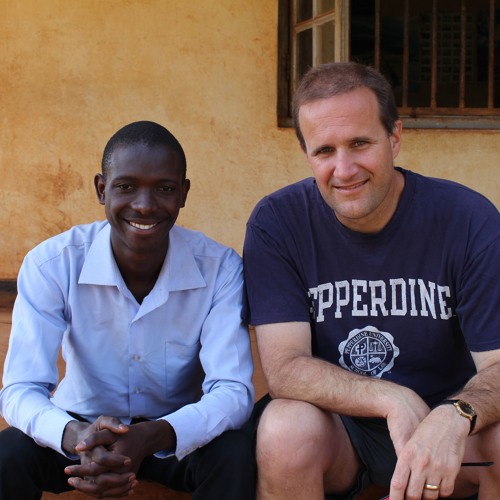
That same year, two Pepperdine law students attended the first annual Judiciary Conference in Kampala, Uganda. Upon their return, they engaged Dean Starr to inquire whether Pepperdine Law students could be of service to the Judiciary of Uganda. Dean Starr visited Chief Justice Odoki and, upon his return, invited his associate dean of students and professor of law, Jim Gash, to work with these students and the Judiciary of Uganda in the promotion of heightened efficiency and access to justice. Over the next few years, Jim Gash traveled to Uganda to build relationships with the Judiciary and launched the Pepperdine Law Global Justice Program. Eventually, the Judiciary accepted Pepperdine Law students as summer interns and Professor Gash began working in the juvenile detention centers, called Remand Homes, along with Pepperdine Law students. In 2014, Professor Gash moved to Uganda for six months and represented a Remandee who was falsely accused of murder. As a result of Jim’s advocacy, the young man was acquitted and released. Today, that young man is a medical doctor in central Uganda and has built and runs a community hospital. The whole story was captured in the award-winning documentary, REMAND.
Building the Institute
Over the next five years, Professor Gash invited annual delegations of the Chief Justice of Uganda and his leadership to collaborate on the implementation of plea bargaining in Uganda. Through the implementation of plea bargaining rules and Prison Projects, the Judiciary of Uganda was able to reduce the average time to trial from 5 years to 1 year by 2022. During this timeframe, Professor Gash visited the judiciaries of Rwanda and Ghana to discuss similar programs. In addition, Pepperdine began sending summer interns to all three countries.
In 2017, Professor Gash and other Pepperdine leadership met with Pepperdine Law alumna, Laure Sudreau, to discuss an endowment for the Global Justice Program. As a result, Laure Sudreau chose to endow the Sudreau Global Justice Program, which fueled a new level of relationship and engagement between Pepperdine and Uganda.
In 2019, Professor Gash was selected by the Pepperdine Board of Regents to become the Eighth President of Pepperdine University. Upon the assumption of his new role and responsibilities at the university, President Gash passed the baton of leadership to Vice President and Chief of Staff, Danny DeWalt, to oversee the activities of the Sudreau Global Justice Program.
The Expansion
In the early 2020s, the Sudreau Global Justice Program changed its name to the Sudreau Global Justice Institute (SGJI) under the leadership of Director Cameron McCollum, to punctuate the academic strength of the Institute through courses like Human Rights taught by Gary Haugen, Founder and CEO of International Justice Mission, Anti-Human Trafficking taught by John Cotton Richmond, former Ambassador at Large for Combating Trafficking in Persons, and the Human Trafficking Lab, facilitating legislation drafted by law students to impact law in California.
During this phase, SGJI began working closely with the judiciaries of Rwanda and Ghana in the implementation of plea bargaining and mediation. Rwanda, in particular, had immediate success adopting the example of Uganda and experiencing significant case resolutions and reductions in case backlog. These metrics, combined with the multi-year data from Uganda, formed a compelling story of the impact of plea bargaining on criminal justice systems in Africa.
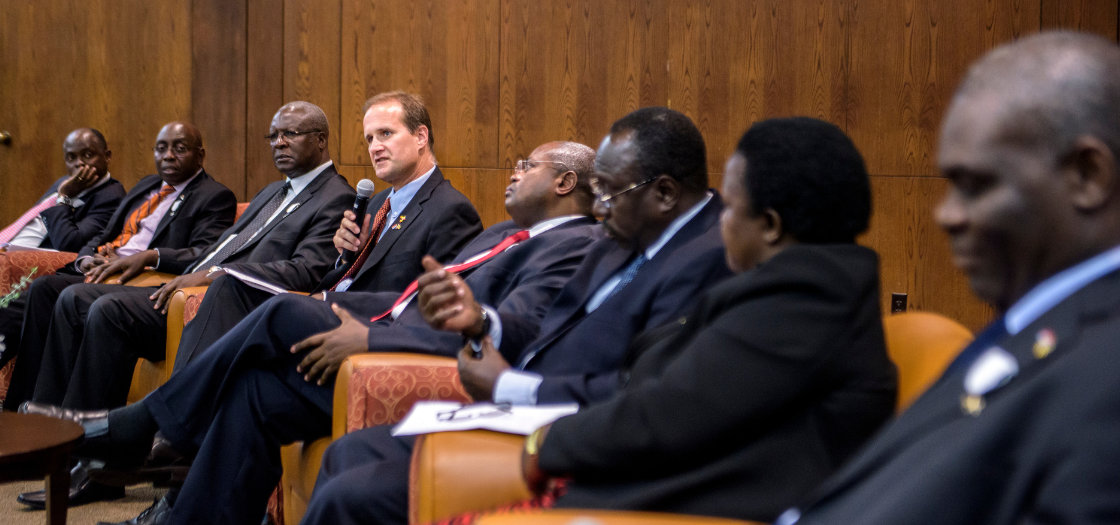
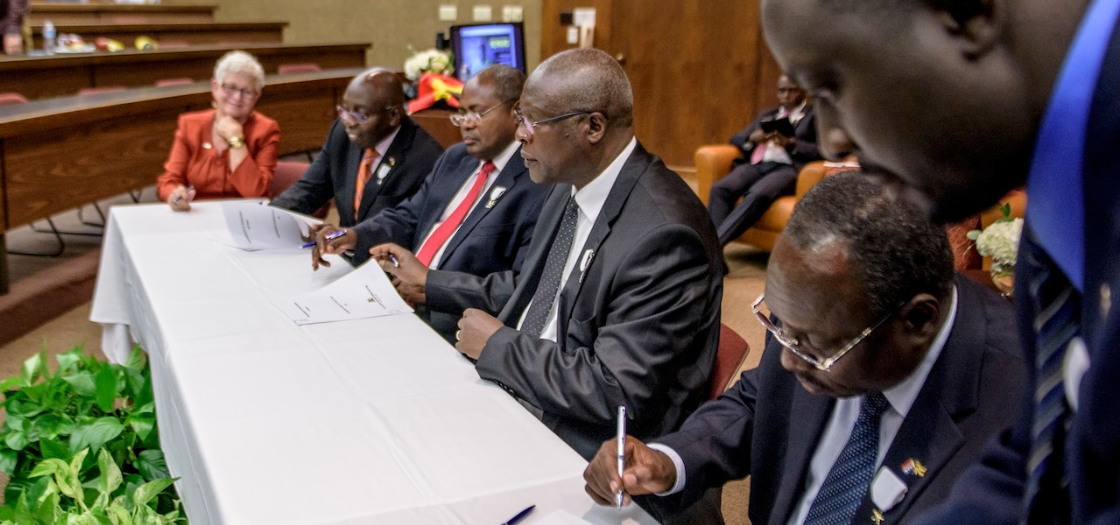
In March 2024, Pepperdine, in collaboration with the Judiciary of Uganda, invited all of the chief justices across Africa to attend the first Chief Justices ADR Summit in Kampala, Uganda. The purpose of this conference was for Pepperdine and Uganda to share the story of effectiveness and transformation in the Ugandan criminal justice system. Twenty-two African countries were represented at this conference. During the course of the two-day conference, the chief justices met privately to discuss forming a coalition of mutual support in the application of plea bargaining and mediation for the advancement of the rule of law, the improvement of access to justice, and the efficiency of the administration of justice to reduce case backlog and overcrowding in prisons. As a result, 13 chief justices signed an MOU forming the Africa Chief Justices ADR Forum (ACJADRF), the first pan-Africa chief justices forum in history. Today, there are 18 member countries across Africa with many others inquiring about membership.
In October 2024 and 2025, Pepperdine hosted the ACJADRF at its campus in Vevey, Switzerland
for its annual meeting and ongoing customized ADR training for chief justices. Since
March of 2024, Pepperdine has collaborated with the ACJADRF in collective capacity
building across the continent of Africa as well as intensive and ongoing training
in many countries including Uganda, Rwanda, Ghana, Somalia, Ethiopia, Malawi, Botswana,
Zambia, Namibia, Zimbabwe, The Gambia, Western Sahara, Sierra Leone, and Nigeria.
The Future of the Institute
On January 1, 2026, Seth Bamburg took the baton as executive director of SGJI. Under Seth’s leadership, SGJI will expand its summer internships to four countries: Uganda, Rwanda, Ghana, and Malawi. In addition to building a sustainable system for the expansion of justice reforms across the continent of Africa, SGJI has begun direct engagement in human trafficking efforts. In October 2025, Cameron McCollum led a team to Lagos, Nigeria, in collaboration with the Tim Tebow Foundation, to convene a conference on legislating against trafficking in persons in West Africa. Future conferences addressing similar trafficking issues are expected.
In addition, Pepperdine has entered into an MOU with The Religious Freedom Institute (RFI) to combat religious persecution for all people around the globe. In June 2025, Pepperdine and RFI hosted the first International Religious Freedom Summit in Nairobi, Kenya, in collaboration with the Chief Justice of Kenya. In 2026, SGJI is partnering with the ACJADRF to address serious religious persecution issues across Africa.
The future of the Sudreau Global Justice Institute will continue to focus on rule of law and access to justice reforms, transforming justice system efficiency, anti-trafficking in persons, and international religious freedom across the globe.